Blog
Management
Humanized support: how to improve customer service in the beauty industry
Discover how humanized support and personalization elevate service in salons and aesthetic clinics.

For some time now, I have noticed how clients of salons, beauty clinics, and barbershops are not just looking for results; they want memorable experiences. In the world of beauty, the differentiator lies in caring for people at every touchpoint, through active listening and truly close communication. In my opinion, the concept of humanized support stops being theory and becomes the secret to an unforgettable service.
What does humanized customer service mean in the beauty sector?
When I assist or observe the daily routine of beauty spaces, I notice that the ones who win over the client are those who manage to create an emotional bond. Humanized service is much more than answering questions or managing schedules: it is about looking at each client as unique, understanding their preferences, stories, and expectations. I usually associate truly human support with three main pillars:
Deep empathy
Personalization of every detail of the service
Building memorable experiences
These pillars, when applied consistently, transform the salon or clinic environment into a space where clients feel a sense of belonging and safety. I have seen, in practice, that a smile, active listening, or a simple personalized reminder make all the difference.
Why is empathy so relevant in beauty customer service?
Empathy is not just "putting yourself in another person's shoes" – it is feeling along with them, identifying emotions in the client's eyes and words. Certain professionals I admire create magic when they manage to capture an insecurity even before the client verbalizes it. In my understanding, empathetic contact goes beyond standard friendliness. It involves gestures such as:
Remembering the client's name and special occasions
Recognizing signs of discomfort and acting quickly
Adjusting the tone of voice and language for each person
Validating feelings - in other words, making it clear: "I understand you!"
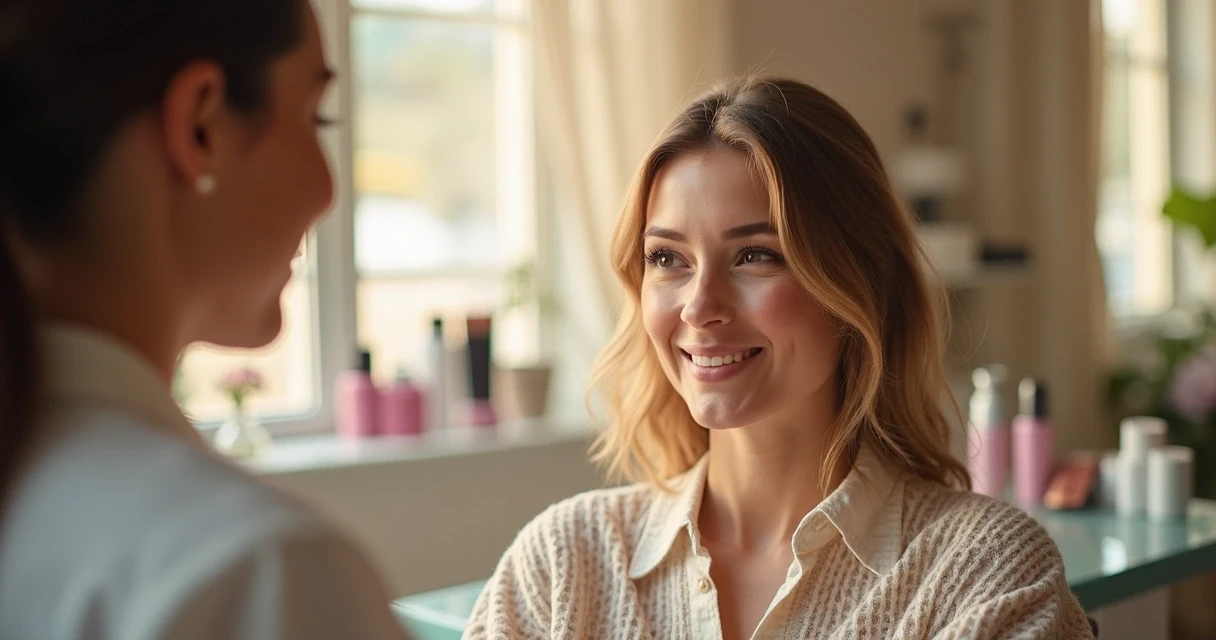
Some time ago, I served a client who had gone through a bad experience at another place. I listened carefully and, when proposing a procedure, I explained each step, always seeking her consent. In the end, the satisfaction was clear – because my listening was active. Empathy builds trust and turns clients into fans.
Personalization as a key ingredient
In my experience, offering personalized service is directly proportional to the level of client satisfaction. Clients fondly remember personalized details: a coffee made their favorite way, the suggestion of a service aligned with what was said during their last visit, or even recognition of personal achievements. To personalize successfully:
Maintain an updated history of preferences and restrictions
Use files or a system like Belasis to register relevant information
Create customized marketing campaigns, even via WhatsApp, suggesting treatments based on consumption profile and commemorative dates
The culture of personalized service aligns with data from Procon/MS, which indicates that the value of services in beauty salons varies greatly. When the price is high, but the support is cold and generic, the client feels little return. On the other hand, when they receive close and personalized care, they see the justification in the prices and become loyal.
Positive customer experience: what really matters?
Prices, advanced techniques, and a beautiful environment attract clients. But, from what I hear and experience, it is the service that defines whether the experience was positive. I remember a simple situation: a client was late, but she was received with lightheartedness and understanding. This care made her talk about the place with her friends, generating new referrals. Thus, I believe:
What makes an impact is not the service provided, it is how the client feels when receiving it.
According to data from Anvisa, in 2017, about 66% of complaints regarding health-related services referred to salons and beauty clinics. This shows a need not only for good hygiene practices, but for human, safe, and welcoming attitudes, avoiding obvious complaints and dissatisfaction.
Practices to humanize support in beauty spaces
After years of working and monitoring different service formats, I have observed that some habits make support indeed more welcoming. I share some fundamental practices:
Active listening makes service more human
How many times have I seen rushed professionals, replying while the client is still talking? Active listening is pausing, paying attention to facial expression, gestures, and what is said – and unsaid.
Active listening is a gateway to creating lasting connections.
Some examples that I usually apply and guide my team on:
When scheduling, ask: "How can I help you today?" and let the client speak without interruptions
Repeat what was understood to validate: "So, you prefer a shorter cut, correct?"
Observe reactions in the mirror: an uncomfortable look usually reveals a lot!
These small attitudes already show that there is a genuine interest in the client's satisfaction and well-being.
Use of close and accessible language
In salons and clinics, I sometimes see too many technical terms distancing the public. I always try to adapt my speech to the client's knowledge, avoiding jargon and fragmented communication. For example, when talking about more complex hair treatments:
I translate technical terms into simple language
I offer everyday comparisons to facilitate understanding
I maintain a respectful tone, without infantalizing
I have witnessed shyer clients who only returned because they felt comfortable enough to ask questions, without fear of them being thought of as "silly". A close language brings people together and makes the client more secure.
Clarity in communication and fast response
Another vital point of humanizing support is clarity in the exchange of information. I always keep everything transparent, from prices to deadlines and potential setbacks. I also take quick response times seriously. In the beauty sector, time is valuable and nobody likes to wait days for simple answers.
Confirm appointments immediately (management systems, such as Belasis, facilitate this)
Notify about possible delays or schedule changes before discomfort happens
If it is not possible to resolve on the spot, say that you are checking and get back to them shortly after
In my daily routine, I have already seen how delays and misunderstandings frustrate clients, even before the service begins. Avoiding this is fundamental.
Technology without losing closeness: how to balance?
The digital world has brought agility, but many fear that the human touch will be lost. I share my view: technology can and should drive more human service, provided it is used to bring people closer.
At the salon I manage, WhatsApp has become a tool to confirm bookings, send reminders, and answer questions quickly. The use of management systems like Belasis made it possible to centralize client information, personalize contact, and maintain a detailed history of preferences.

Online scheduling avoids misunderstandings and allows the client to choose their own times
Automated messages promptly remind about appointments, reducing no-shows
Automation tools free up team time so they can focus on what really matters: care in customer service
Recently, a client commented that she preferred scheduling on her own, late at night, without having to speak on the phone. Respecting each person's style is part of this balance between technology and human service. This subject has already been the theme of interesting debates in the management world.
The role of Belasis in humanizing support
A system developed for beauty salons and clinics, like Belasis, emerges precisely to simplify processes and help deliver attention to what matters: the client. In my experience, I see some direct advantages:
Detailed client registration, with automatic recording of preferences, allergies, favorite times, and feedback from past visits
Sending personalized communications on WhatsApp, whether to remind of appointments or congratulate on birthdays
Reports that make it possible to identify clients who have not visited the salon for some time, allowing for re-engagement actions
Standardization of service, even for large teams, without losing the personal touch
When I notice a team overwhelmed by operational tasks, I know that time for attentive support may be lacking. Tools like Belasis work behind the scenes to free up productive time and keep each contact more authentic.
Training teams for more human support
One of the biggest challenges I have followed in beauty salons is team development. Many technical professionals are flawless, but feel insecure when dealing with the public. Therefore, I consider constant training fundamental.
Some strategies that I like to apply to train teams:
Periodic meetings to discuss real service situations
The role of each professional in active listening, clear communication, and close language
Practical simulations (role play), to develop confidence and naturalness in delicate conversations
Constructive feedback, valuing successes and adjusting small slips with lightness and respect
Training focused on humanizing is not something theoretical. By sharing everyday examples, I feel that learning sticks and the service becomes lighter and more sincere. I encourage the team to treat each person differently, to run away from ready-made answers and listen to stories.
Unifying channels and centralizing customer service
In the current scenario, clients can speak on the phone, through Instagram, WhatsApp, email, and even directly in the salon's own apps. The fragmentation of these channels increases the risk of losing messages, creating noise, or delaying responses. I found clear gains when adopting a strategy of unifying contact points:
Centralize appointments and questions in a single system
Define hours and people responsible for service in each channel
Establish standards for tone of voice and response, while remaining human
Use CRM tools or systems like Belasis to ensure every interaction is recorded
A memorable case for me was of a client who left a message in Instagram DM, but since no one monitored that channel, she missed an important appointment. I then decided to centralize everything in our own app, with automatic notifications. The problem never happened again!
Collecting and using customer feedback
Listening to the client is the shortest path to evolving service and building stronger bonds with the public. In my work, I like to encourage constant feedback, whether informally – at the end of the service – or with surveys after the visit.

Using automated systems for after-sales speeds up the process and demonstrates interest in hearing reviews or compliments. Tips to apply:
Request feedback a few minutes after the service, through the same channel as the appointment
Value positive comments and act quickly on negative ones
Always thank those who contribute, even if only with suggestions
I know salons that apply periodic surveys and adapt the service according to the responses. This feeds improvement cycles and brings people closer to the brand.
Practical examples: common situations and how to act in a humanized way
To make it more tangible, I share some common situations and how I usually guide the team to act:
Client dissatisfied with the service result
Even with experienced professionals, it can happen: the client is not satisfied. What do I guide?
Listen sincerely to what displeased them, without interrupting
Demonstrate understanding, without shifting the blame to the client
Negotiate a solution – immediate fix, discount, or free next service
Record the occurrence in the system, to monitor that client especially in the next visits
Confusion in the agenda or schedule
Errors in scheduling or delays damage trust. The best path is:
Take responsibility for the error, whether in the confirmation or delays
Offer priority for a new time, without bureaucracy
If possible, compensate with a treat (flash hydration treatment, drink, etc.)
Train the team to record all communication in the system
Shy client or one who doesn't like physical contact
Absolute respect. Questions are always encouraged before starting each stage, the client is not touched without authorization, and if they prefer silence, that must be respected. I usually guide the team to ask "is it okay to do this?" in each new procedure.
Retention and differentiation through closeness and care
In the beauty market, where services can have a large price variation and high competition, what makes a salon a reference are relationships. More than cutting hair or doing nails, professionals are agents of self-esteem and producers of well-being. Clients who feel welcomed refer friends. Retention is a recurring theme among managers.
Loyalty is built in the sum of small gestures over time.
I adopt some practices to promote this positive cycle:
Keep in touch even after the service – birthdays and special dates deserve personalized messages
Organize punctual actions: coffees, workshops, events for loyal clients
Recognize and reward referrals
Create exclusive experiences for those who return more often
These attitudes increase the number of returns and turn clients into true promoters of the services you offer.
The role of digital marketing in closeness to the client
Nowadays, digital channels are entry doors to relationships. In my routine, I combine WhatsApp campaigns, informative posts, and short videos to inform and bring people closer. I like to show behind-the-scenes, explain treatment details, and share salon causes. This creates identification.
I use strategic content, such as those addressing industry trends and practical tips, to talk with different audiences, always prioritizing a dialogic and true language.
Tools like Belasis make it possible to monitor client engagement, offer segmented promotions, and measure the results of each action. It is possible, for example, to create campaigns to win back inactive clients or encourage referrals, always in line with each person's profile.
How more human support influences business reputation
In discussions with other professionals, I notice that public complaints on review sites and social media are usually not just about bad service, but about cold, uninterested, or rude customer service. A team prepared to resolve conflicts, be transparent, and act with empathy strengthens reputation. Historically, those who resolve problems with humanity reverse crises and turn detractors into fans.
Spontaneous positive reports and reviews always come accompanied by details about the service: "I was treated with affection," "I felt welcomed," "the professional truly listened to me." This reinforces that investing in human support is the right path to win trust and stand out in the market.
Conclusion
In all these years working and following the beauty sector, I saw how humanizing service is the secret to stand out, even when competition and challenges increase. More than technological solutions or perfected techniques, what retains and differentiates a salon, barbershop, or beauty clinic is care in treatment, active listening, personalization, and closeness in communication.
Belasis is born precisely to help businesses and professionals maintain these human bonds, even in an increasingly digital and dynamic world. Systematizing processes, personalizing contact, listening to those who matter, and freeing up time for true service: that is what I guarantee clients never get tired of.
If you want to transform the way your salon or clinic relates to clients, I invite you to get to know Belasis and experience a new level in humanized and efficient management. For more insights on the beauty industry, we recommend reading other free content, like this one here.
Frequently asked questions about humanized support in the beauty sector
What is humanized service in the beauty sector?
Humanized service in salons, beauty clinics, and barbershops means focusing on the relationship with the client, valuing active listening, personalization, respect for individualities, and empathy at all times. The goal is to see the client as a person, offering genuine attention and building memorable experiences.
How to improve client support in beauty?
To improve support, I recommend adopting practices such as active listening, clear communication, accessible language, and fast response times. Implementing tools like online scheduling, management systems, and digital channels, without giving up close contact, also boosts service quality.
What are the benefits of humanized service?
More human services increase client satisfaction and loyalty, improve the business image, reduce complaints, and promote spontaneous referrals. In addition, they help justify higher prices charged for services and decrease the incidence of conflicts.
How to train teams for more humanized support?
Team training must be continuous, involving practical activities, simulations, reflection on real cases, and periodic feedback. Invest in training on empathy, active listening, appropriate language, and conflict resolution. Value everyday examples and encourage welcoming attitudes.
Is it worth investing in personalized service?
Yes, because personalization generates greater connection, differentiation, and loyalty. Clients feel special and are more likely to return and recommend the salon or clinic to friends. Individual campaigns, recording preferences, and differentiated contact increase the perceived value of services.
Share